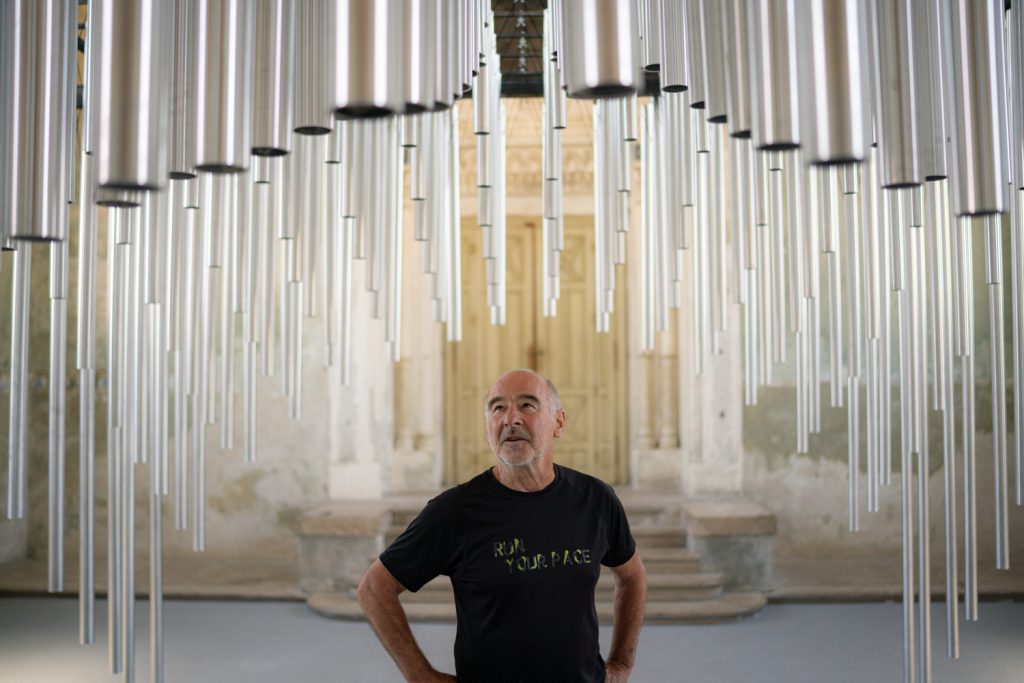
The Lambdoma exists not only as a musical system or theoretical matrix, but as a physical structure — a monumental sound sculpture created by Austrian artist Josef Baier.
It transforms mathematical relationships into a spatial experience, allowing visitors to step inside a field of resonance where sound becomes tangible.
Within the structure, harmonic ratios are no longer conceptual — they can be heard, felt, and navigated.
The work stands at the intersection of sculpture, music, architecture, and physics, continuing Baier’s lifelong exploration of vibration, movement, and form.
The Lambdoma is a precision-engineered steel framework measuring approximately 3.3 meters in height and about 4 meters square.
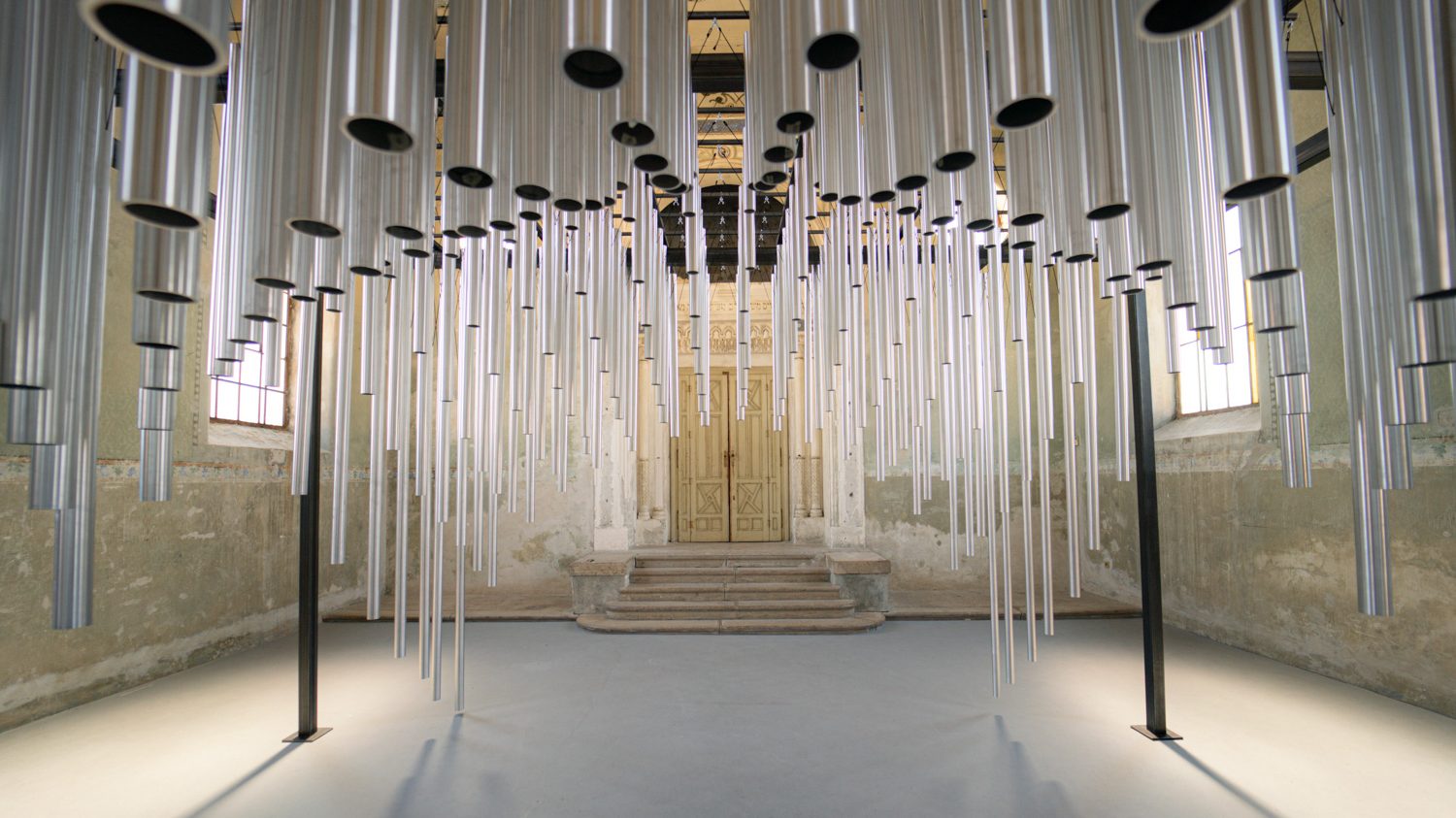
Within this structure, 256 aluminum tubes are suspended freely, forming a three-dimensional matrix of harmonic relationships.
The longest tubes — reaching nearly three meters in length — produce deep frequencies down to approximately 30 Hz, extending almost to the floor without touching it.
Each tube hangs independently, allowing it to vibrate freely without mechanical coupling to the others.
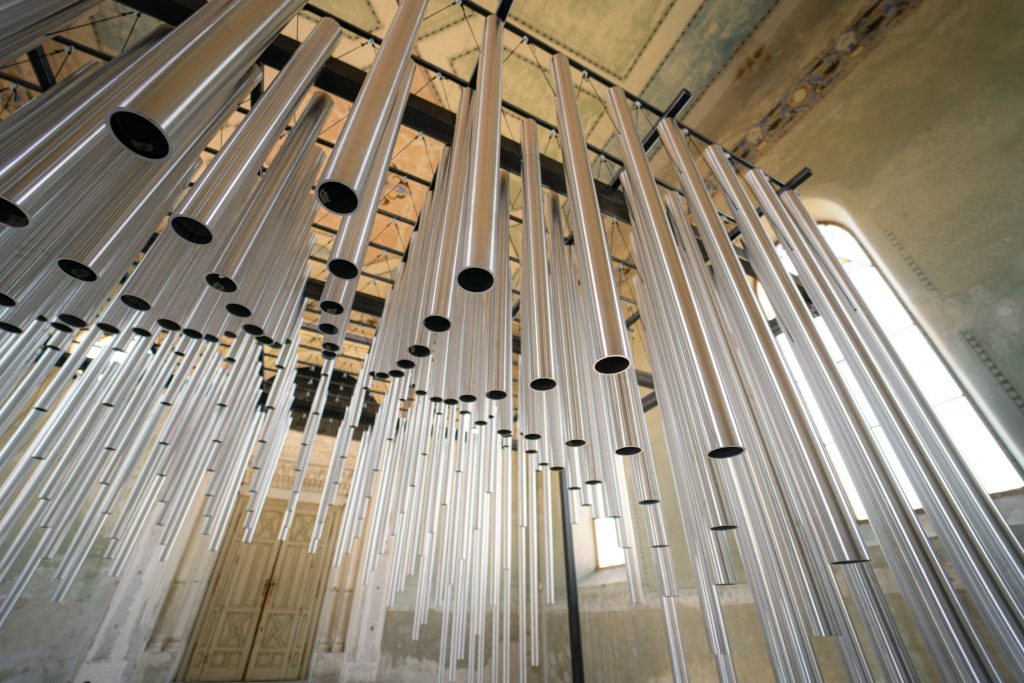
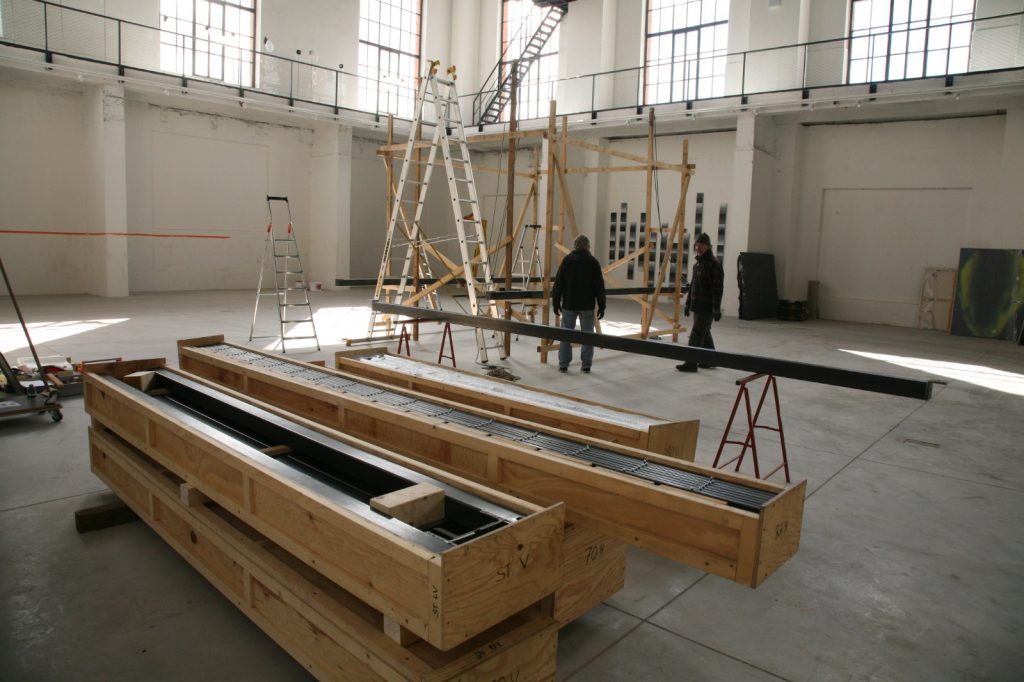
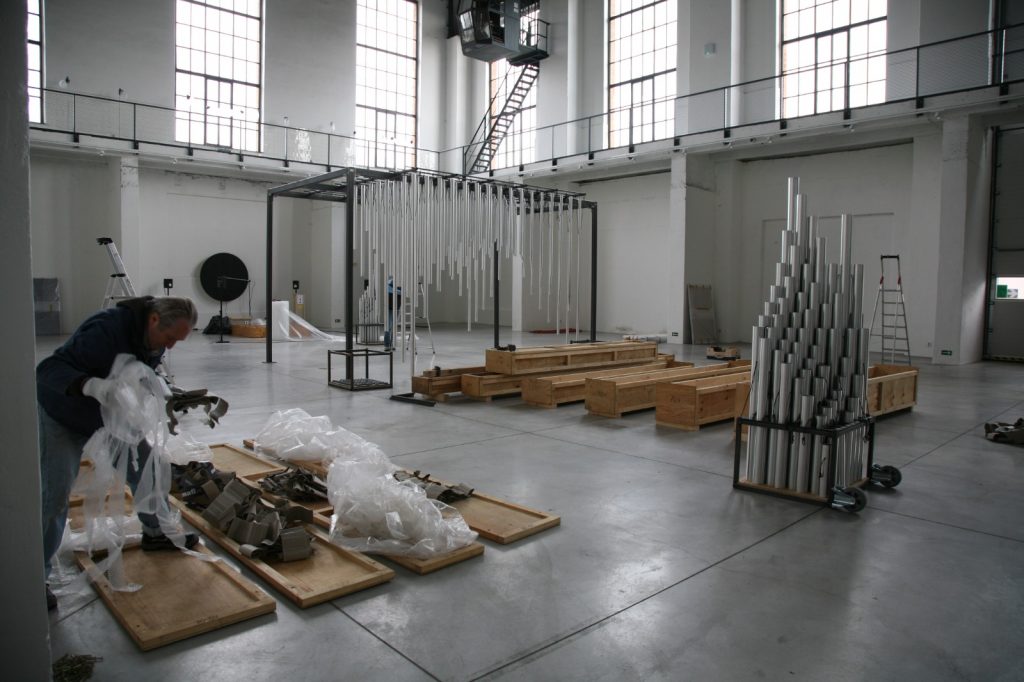
The sculpture is assembled through a carefully choreographed process requiring precision and experience.
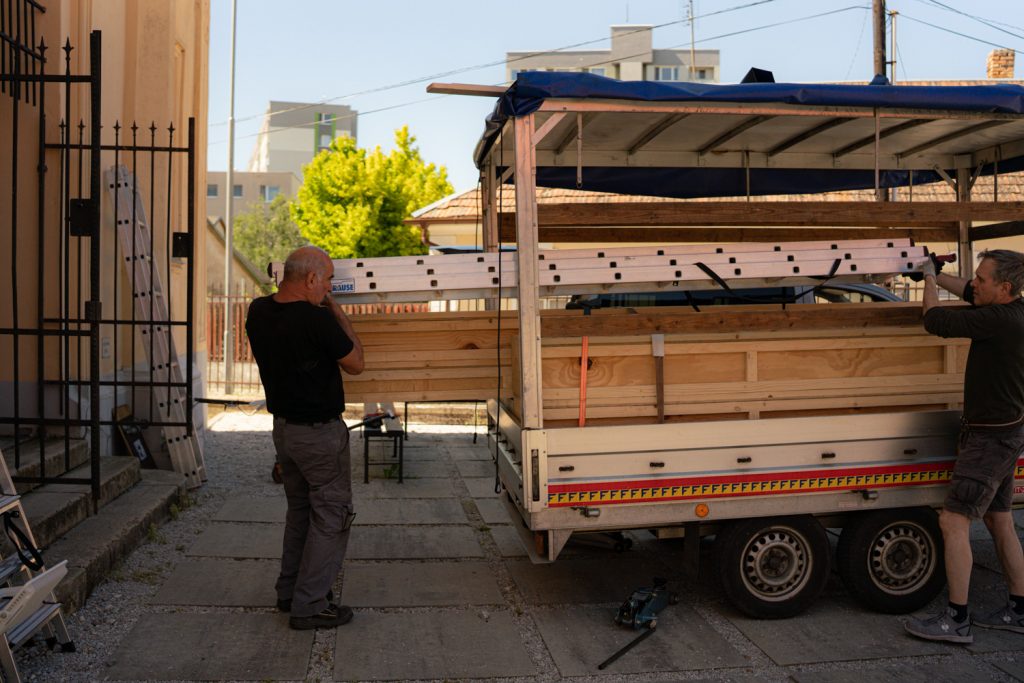
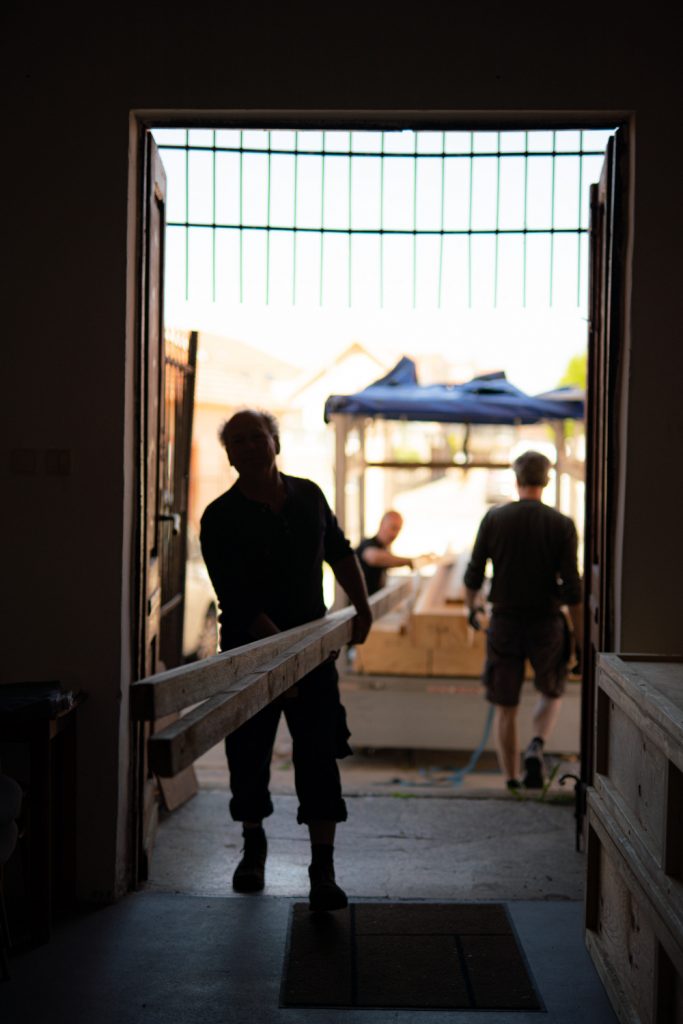

A temporary wooden support structure is first erected to position the steel frame. Steel beams are then mounted to form the structural body, followed by a grid system defining the matrix.
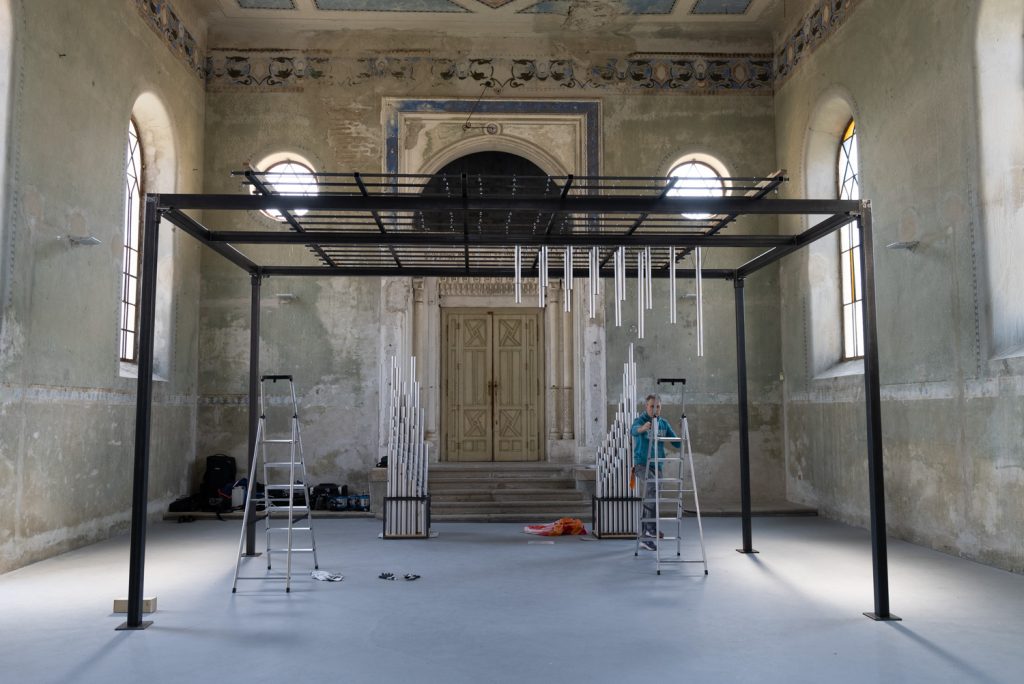
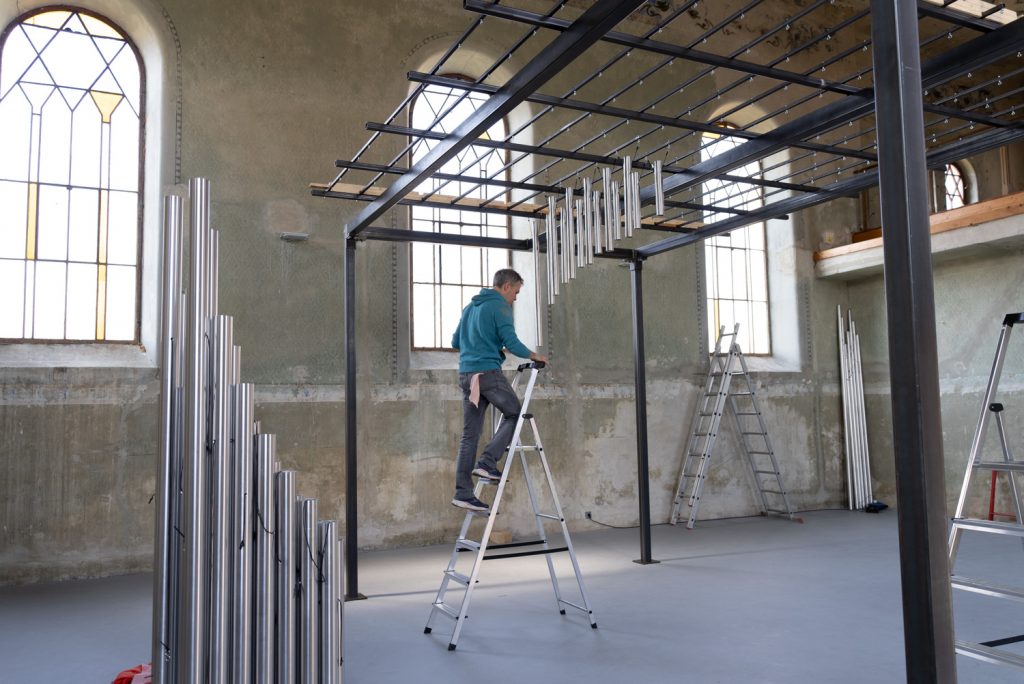
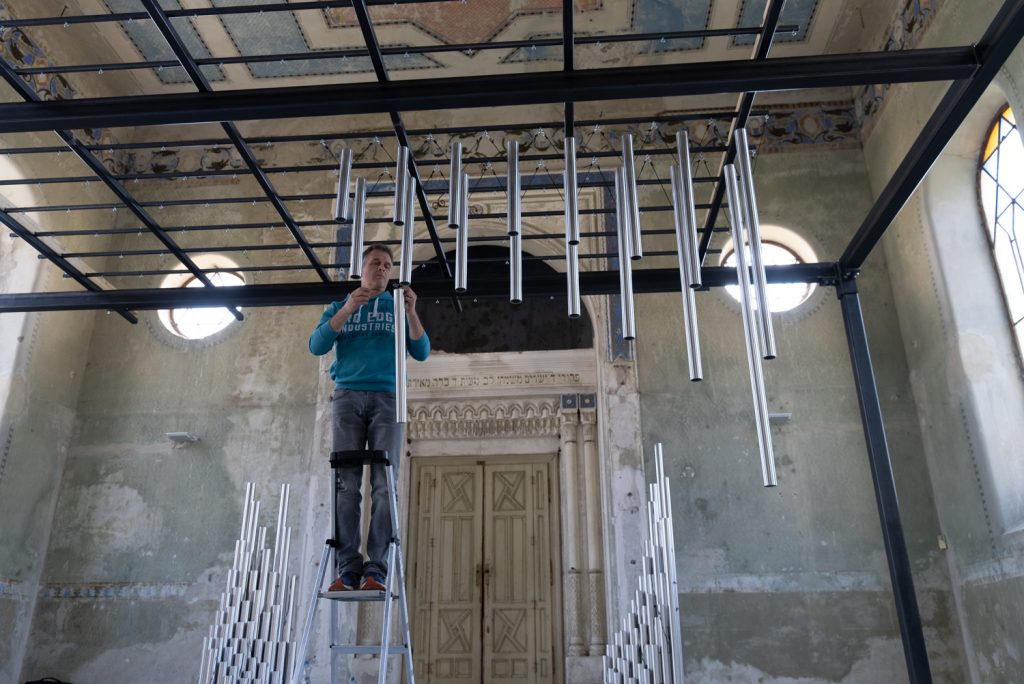
Each tube is suspended using cords and hooks according to a precise order system. Because the tubes are visually similar, their correct placement is essential — even small deviations would disrupt the harmonic relationships of the structure.
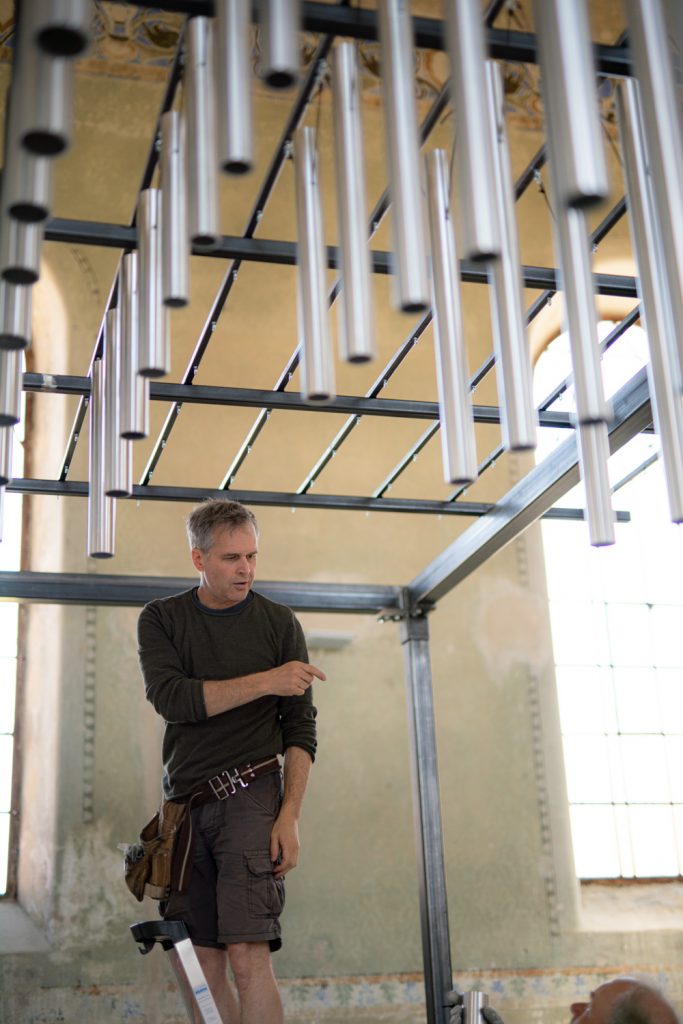
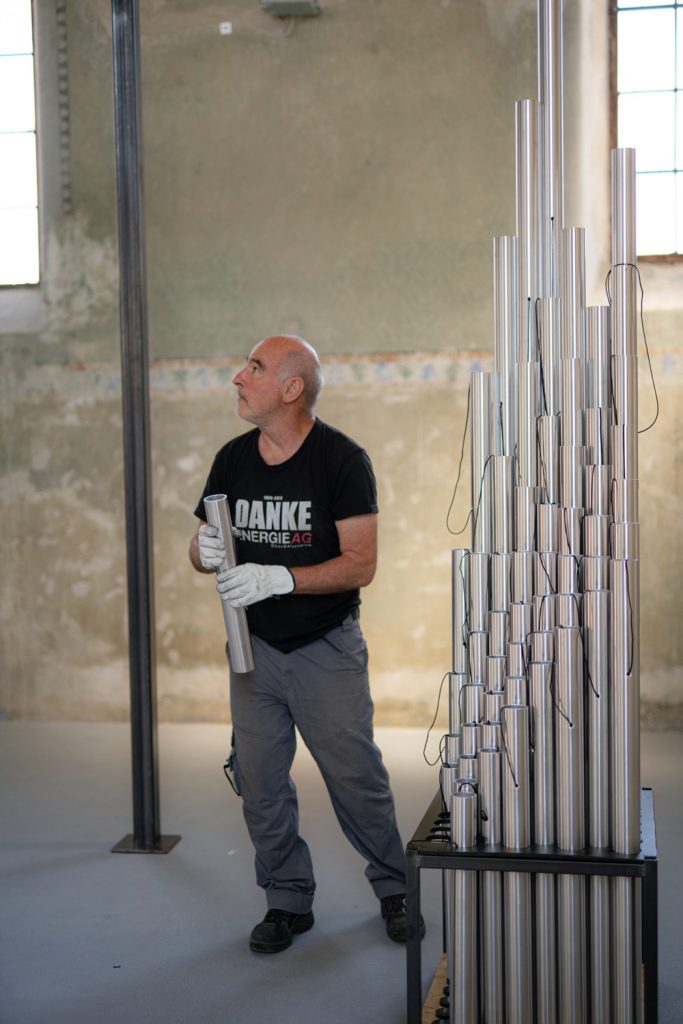
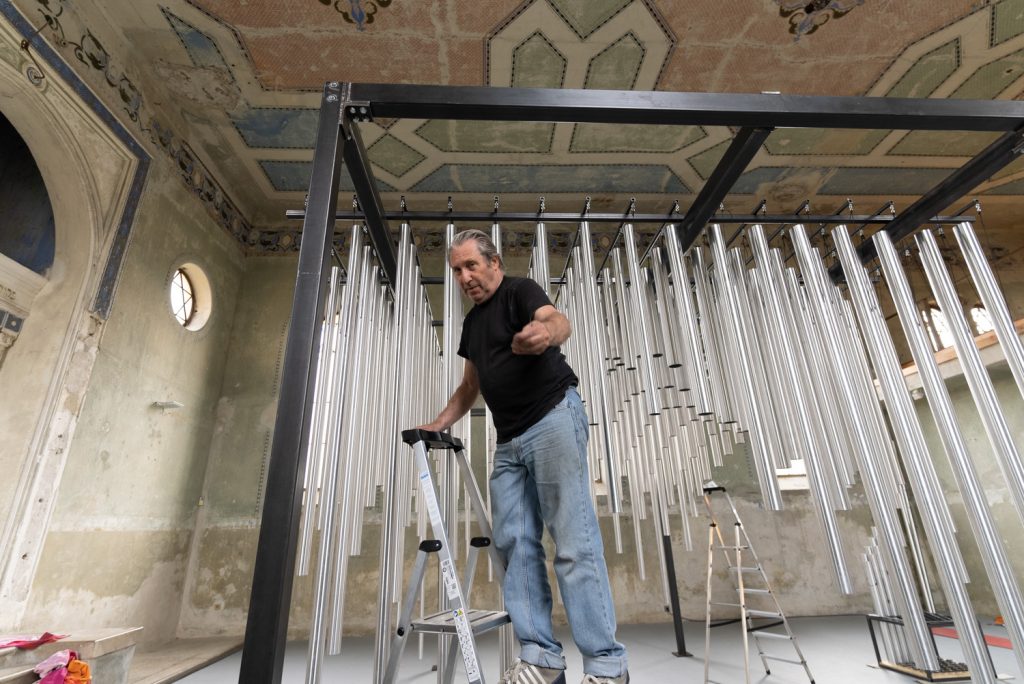
Special sorting systems and mounting tools ensure that every tube is positioned accurately within the matrix. Installation is typically carried out by an experienced team (4 people) familiar with the structure.
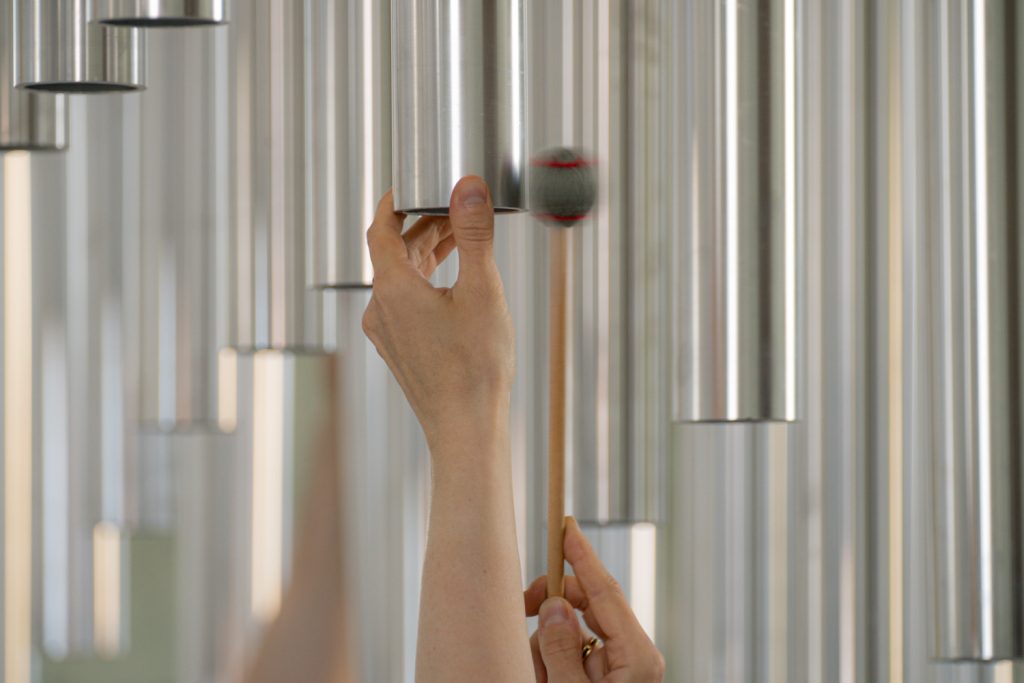
Although monumental in scale, the Lambdoma is a highly sensitive instrument requiring precise playing techniques.
Each tube responds differently depending on its length, diameter, and mass, requiring carefully chosen mallets.
Large, low-frequency tubes are played with heavy, soft mallets similar to those used for large gongs. The performer often supports the tube lightly from behind to control movement and prevent excessive oscillation.
The goal is to excite the fundamental tone as clearly as possible, allowing the harmonic relationships within the Lambdoma matrix to remain perceptible.
Higher tubes are played with lighter mallets or long wooden rods fitted with piano hammer heads to reach the upper regions of the dome.
Because the Lambdoma is built on overtone and undertone relationships, clarity of pitch is essential. Playing therefore focuses on activating the fundamental resonance rather than emphasizing complex overtone spectra.
The tubes produce a bell-like spectrum with complex partials. Playing techniques focus on emphasizing the primary resonance to maintain clarity within the harmonic matrix.
When played with precision, the tubes produce long, sustained tones with rich resonance.
After intense playing, the sculpture can continue sounding for several minutes before complete silence returns, creating a slowly evolving sonic atmosphere.
Low frequencies propagate through the space as physical vibration, making resonance perceptible not only acoustically but also through the body.
The acoustic field is dynamic and continuously shifting, shaped by the interaction of harmonic ratios across the entire structure.
Rather than producing a fixed tonal output, the Lambdoma creates a living sound environment.
Standing inside the Lambdoma is a full sensory experience.
Low frequencies propagate through the body as tactile vibration, making resonance perceptible not only through hearing but through physical sensation.
Sound moves through air, space, and body, creating a perception of vibration that is both auditory and tactile.
The sculpture becomes a field of resonance where tone, space, and perception merge.
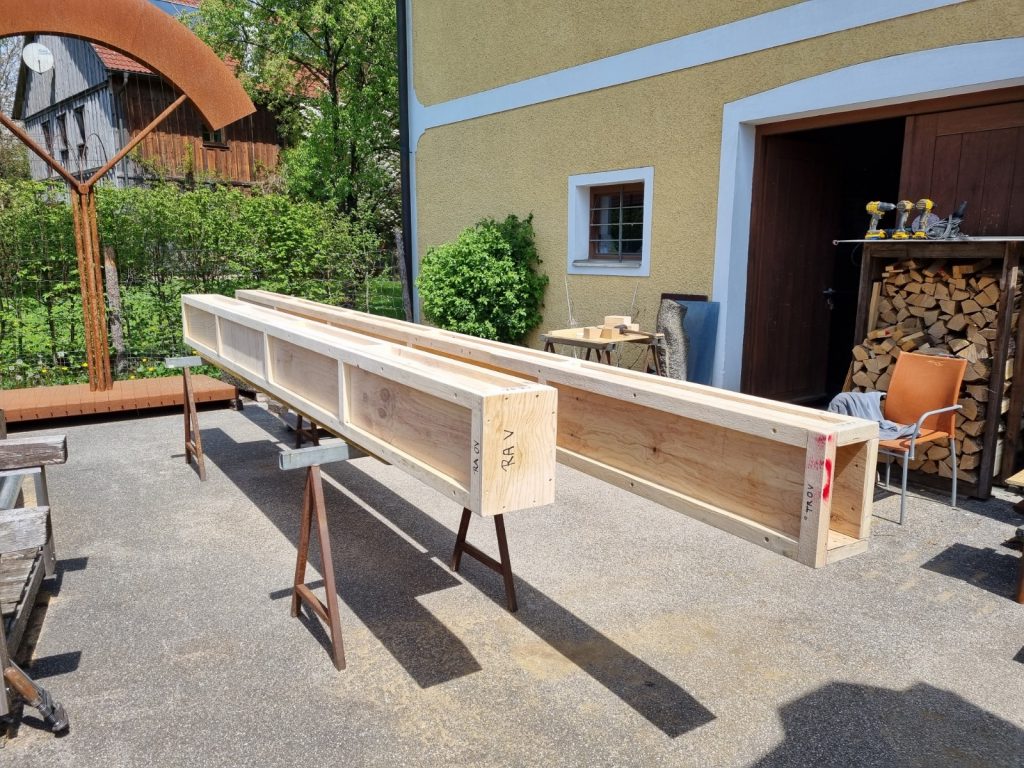
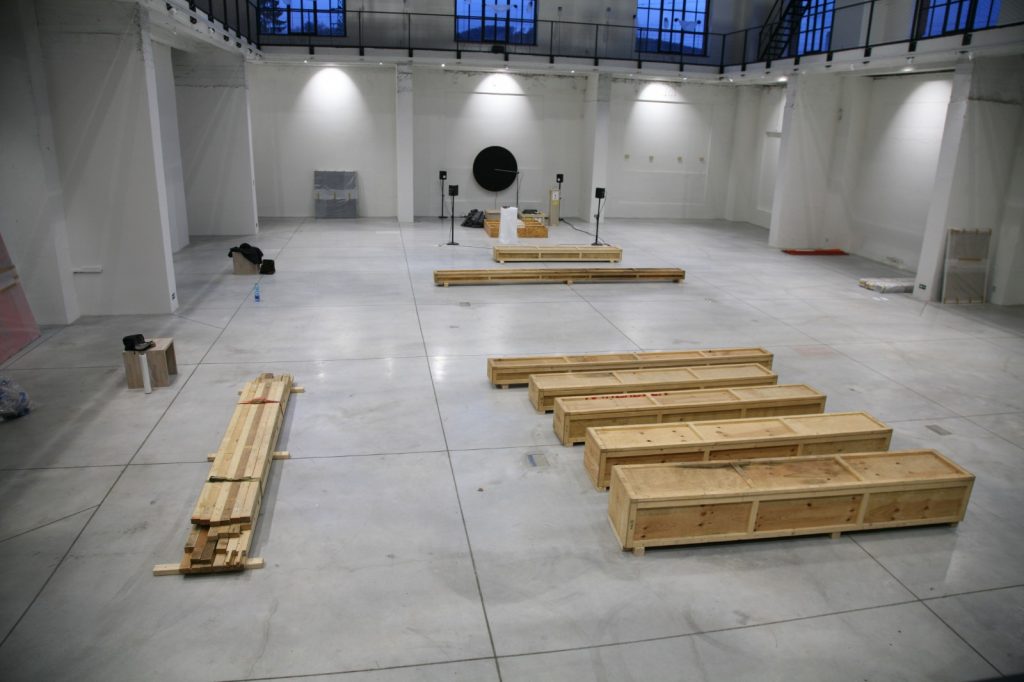
Due to its size and precision construction, the Lambdoma is transported in multiple custom crates with a total weight of approximately 1.8 tons.
Its installation requires careful planning and coordination, emphasizing its architectural character as much as its musical function.

Josef Baier’s work consistently explores relationships between form, vibration, and perception.
Across decades of sculptures and sound installations, he has investigated how physical structures can reveal invisible forces such as resonance, rhythm, and movement.
The Lambdoma represents one of the most comprehensive expressions of this exploration — a synthesis of mathematical clarity, sculptural precision, and sonic experience.
The Lambdoma is not simply an object to observe.
It is a space to enter.
An instrument to activate.
A structure that reveals harmonic relationships through direct perception.
By stepping inside, visitors encounter a rare moment where abstract order becomes physical reality.
- Height: approx. 3.3 m
- Footprint: approx. 4 × 4 m
- Structure: steel frame with suspended grid
- Tubes: 256 aluminum resonant tubes
- Longest tubes: approx. 3 m
- Lowest frequency: approx. 30 Hz
- Tuning: pure harmonic ratios
- Transport weight: approx. 1,860 kg
- Structure: walk-in dome
- Matrix: 16 × 16
“The sculpture makes harmonic relationships physically perceptible — allowing sound to be experienced as space”.